
Reciprocating Compressors Are More Complicated Than They Look
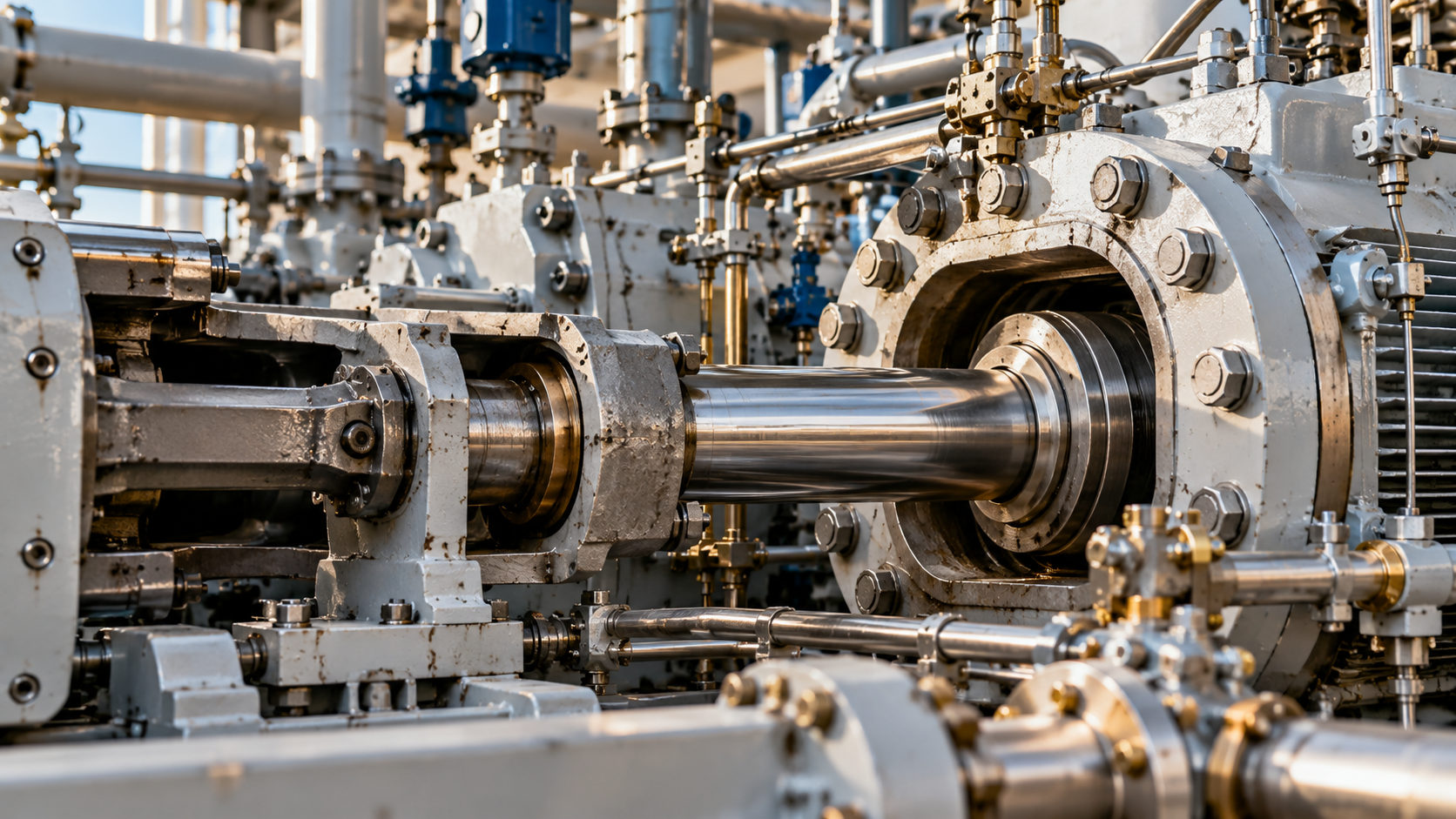
At first glance, a reciprocating compressor appears remarkably simple. A piston moves back and forth within a cylinder, compressing gas with each stroke.
That apparent simplicity is one of the biggest misconceptions about reciprocating compressors.
According to GMRC Subject Matter Expert Dwayne Hickman, it’s easy to understand why people think reciprocating compressors are simple. After all, at their core they’re “just a piston moving back and forth.”
But once you begin looking at the forces behind the scenes, lubrication, and everything else happening inside the machine, that apparent simplicity quickly gives way to complexity. Hundreds of components, changing operating conditions, and multiple engineering principles interact throughout every compression cycle, making reciprocating compressor performance far more complex than it first appears.
Perhaps the biggest surprise for engineers is that reciprocating compressors don’t always behave the way intuition suggests.
More Than the Sum of Its Parts
That piston depends on a much larger system working together. Hundreds of components, interacting forces, and changing operating conditions influence how the compressor performs.
A change in one operating condition can affect far more than a single component. Understanding those interactions helps explain why compressor behavior can defy intuition.
When Simple Changes Don’t Produce Simple Results
One of the most common misconceptions is assuming that changing an operating condition will always produce a predictable outcome.
Some operating relationships are easy to predict. Others aren’t. As Dwayne points out, “You don’t always get the consequences that the brain thinks it should.”
Compressor performance isn’t determined by one or two variables. Inlet pressure, discharge pressure, stage temperatures, operating speed, hardware configuration, gas properties, and other factors may all interact at the same time. A change to one variable can influence several others in ways that aren’t immediately obvious.
As Dwayne explains, “We humans hardly handle three variables nicely. By the time you get into seven dimensions, it’s hard for us to make conclusions.”
That’s one reason reciprocating compressors can surprise even experienced engineers. Multiple operating conditions may be changing simultaneously, making it difficult to predict the outcome by intuition alone.
Looking Beyond Individual Components
Understanding a reciprocating compressor means looking beyond individual components to understand how the complete machine behaves.
Mechanical forces, thermodynamics, fluid flow, lubrication, controls, and equipment configuration all influence one another throughout the compression process.
That systems-level perspective helps explain why troubleshooting often requires more than identifying a single failed component. Engineers need to understand how multiple conditions are interacting before deciding what corrective action to take.
Why It Matters
Recognizing those interactions changes how engineers interpret operating data and troubleshoot unexpected behavior. Rather than looking for one variable to explain one outcome, they can evaluate how conditions across the machine may be influencing what they’re seeing.
That systems-level perspective supports better-informed engineering decisions when compressor behavior doesn’t match expectations.
Keep Building Your Expertise
Reciprocating compressors may look straightforward, but understanding how the variables within the system interact takes a deeper level of technical knowledge.
Continue building that knowledge at the 2026 Gas Machinery Conference, October 4–7 in Indianapolis, where reciprocating compressors are represented throughout this year’s technical program.
About the Subject Matter Expert

Dwayne Hickman is the eRCM Product Manager for Cooper Machinery Services and has worked in the reciprocating compressor industry for more than 30 years. His experience spans compressor modeling, performance analysis, applications engineering, control systems, software development, and technical training; he also serves on the Gas Machinery Conference Planning Committee.
This article was developed from insights Dwayne shared as part of GMRC’s Subject Matter Expert Knowledge Transfer initiative.